


Managing sludge has become one of the most important and costly challenges in wastewater treatment, industrial processing, and municipal environmental management. Whether the sludge comes from sewage treatment plants, food processing facilities, chemical operations, textile factories, or other industrial systems, the same question usually appears sooner or later: what is the most effective way to reduce its volume, lower disposal costs, and make treatment more sustainable? For many years, traditional sludge treatment methods such as dewatering, landfilling, incineration, and natural drying have been widely used because they are familiar and often easier to adopt at the beginning. However, as environmental regulations become stricter and disposal costs continue to rise, more businesses are taking a closer look at sludge dryer technology. This leads to an important comparison: sludge dryer vs traditional sludge treatment methods, which is better? The answer depends on treatment goals, operating conditions, energy strategy, and long-term cost considerations. In this article, we will compare both approaches in detail and explain where each one performs better, where the limitations are, and why many organizations are starting to rethink their sludge handling strategy.
Before comparing treatment methods, it is important to understand why sludge is difficult to manage in the first place.
Sludge is not simply a waste by-product that can be removed without planning. In most cases, it contains a high percentage of water, which means the material is bulky, heavy, expensive to transport, and difficult to dispose of efficiently. Even after mechanical dewatering, sludge may still retain significant moisture. That remaining water increases handling cost and often reduces the value of any downstream reuse or disposal option.
Because of this, sludge treatment is rarely just about getting rid of waste. It is about reducing volume, improving stability, controlling odor, lowering transportation cost, and meeting environmental compliance requirements.
Traditional sludge treatment methods usually refer to processes that have been used for many years in municipal and industrial settings. These methods may vary by industry, but they generally include several common approaches.
Mechanical dewatering uses equipment such as filter presses, centrifuges, or belt presses to remove part of the water from sludge. This is one of the most common first-stage treatment methods because it can reduce sludge volume before further disposal or treatment.
In some regions, sludge is spread on drying beds and left to lose moisture through evaporation and drainage. This method is simple, but it depends heavily on weather conditions, available land, and time.
Landfilling has long been used for sludge disposal after dewatering. While it remains an option in some areas, it is becoming less attractive due to transportation cost, landfill restrictions, and environmental concerns.
Incineration can reduce sludge volume dramatically, but it often requires high energy input, strict emission control, and significant investment in equipment and operation.
Some sludge is treated chemically or biologically before disposal. These processes may improve handling or reduce odors, but they do not always solve the problem of high moisture content.
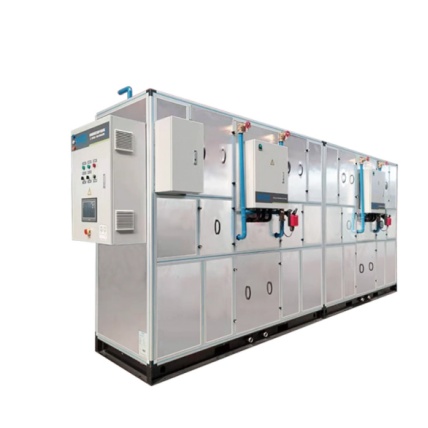
A sludge dryer is a system designed to reduce the moisture content of sludge through controlled thermal drying. Instead of only removing free water mechanically, a sludge dryer targets deeper moisture reduction, helping transform wet sludge into a drier, lighter, and more manageable material.
Depending on the technology used, sludge dryers may operate with different heat sources and drying principles. Some systems use direct heating, while others rely on indirect heating or heat pump-based low-temperature drying. The goal is generally the same: to reduce weight and volume more effectively than conventional dewatering alone.
For many operators, the value of a sludge dryer lies in moving from partial moisture reduction to a much more advanced level of dryness that supports lower disposal cost and easier final handling.
The following table provides a practical overview of how sludge dryers compare with traditional sludge treatment methods.
Comparison Factor | Sludge Dryer | Traditional Sludge Treatment Methods |
Moisture reduction | High | Usually limited or variable |
Volume reduction | Significant | Often moderate |
Transportation cost | Lower after drying | Often higher due to wet weight |
Land requirement | Usually compact | Can be large for drying beds |
Weather dependence | Minimal | High for natural drying |
Disposal flexibility | Improved | More restricted |
Odor control | Better in enclosed systems | Often more difficult |
Initial investment | Higher | Often lower at first |
Long-term operating value | Often stronger | Depends on disposal cost trends |
This comparison does not mean a sludge dryer is automatically the right answer in every case. However, it shows why more facilities are comparing lifecycle value rather than only the lowest upfront cost.
It is important to be realistic. Traditional sludge treatment methods still have a place in certain situations.
If a facility has access to low-cost land, low sludge volume, relaxed disposal requirements, and limited capital budget, traditional approaches may still be practical. Mechanical dewatering, for example, remains an essential stage in many sludge treatment systems. In some operations, using a belt press or centrifuge before final disposal may be enough.
Traditional methods may also remain suitable when sludge generation is relatively small or when the treatment target does not require deep drying. A business that only needs basic volume reduction may not immediately need a thermal drying solution.
So the issue is not whether traditional methods are obsolete. The real issue is whether they are still efficient enough under current economic and regulatory conditions.
The growing interest in sludge dryers is not accidental. It usually comes from pressure in one or more of these areas:
· rising disposal fees
· higher transport cost
· stricter environmental regulations
· limited landfill availability
· need for cleaner and more controllable treatment
· demand for lower operating footprint
When sludge remains wet, every downstream step becomes more expensive. The material is heavier, harder to handle, and more costly to transport. In contrast, drying can significantly reduce mass and improve handling efficiency. This often changes the economics of the entire sludge treatment process.
For many facilities, the decision to add a sludge dryer is driven by a shift from short-term thinking to long-term operational optimization.
One of the most important factors in this comparison is moisture content.
Dewatered sludge may still contain a large percentage of water. That means the facility is often paying to store, move, and dispose of water rather than just solids. Even if traditional dewatering improves sludge consistency, it may not go far enough to create a truly efficient end product.
A sludge dryer changes the equation because it can reduce moisture to a much lower level. This has multiple effects at the same time:
· lower total volume
· lower transportation weight
· easier storage and handling
· improved potential for downstream utilization
· reduced odor and biological instability in some cases
In practical terms, better drying can directly influence disposal strategy and total cost structure.
When comparing sludge dryer vs traditional sludge treatment methods, the better option is usually the one that best matches long-term treatment goals rather than the one with the lowest starting cost. Traditional methods still have practical value in some low-volume or low-pressure situations, especially where budget constraints are strong and disposal remains simple. But as sludge disposal becomes more expensive, environmental requirements become stricter, and facilities need more predictable performance, sludge dryers often provide a more efficient and forward-looking solution. From our perspective, the strongest advantage of sludge drying is not only moisture reduction, but the way it improves the economics and manageability of the entire sludge handling process. At TENESUN Heat Pump Co., Ltd., we believe each project should be evaluated based on sludge characteristics, plant conditions, energy strategy, and long-term operating expectations. For readers exploring whether a sludge dryer is the right step for their facility, it is worth taking a closer look at practical system design and discussing the options with an experienced manufacturer that understands both performance and operating realities.
The main difference is the level of moisture reduction. Traditional methods often reduce water content only partially, while a sludge dryer can achieve deeper drying and significantly reduce sludge volume and weight.
They often require a higher initial investment, but they may provide better long-term value by reducing transportation, disposal, and handling costs.
A facility should consider upgrading when sludge disposal costs are rising, landfill access is limited, moisture content remains too high after dewatering, or tighter environmental control is needed.
Yes. In many systems, mechanical dewatering is used first, followed by sludge drying to achieve a lower final moisture content and better overall treatment efficiency.


