


When homeowners, developers, and commercial buyers compare heating systems today, one of the most common questions is clear: Air Source Heat Pump vs Gas Boiler: Which Is More Cost-Effective? The answer is not as simple as comparing the purchase price of two machines. Real cost-effectiveness depends on a wider set of factors, including installation cost, energy efficiency, local energy prices, climate conditions, maintenance requirements, carbon regulations, and the expected service life of the equipment. In many markets, gas boilers have long been considered the standard option because of their familiar technology and lower upfront investment. However, air source heat pumps are increasingly being recognized as a strong long-term alternative because they can deliver efficient heating with lower energy consumption and reduced emissions. As energy markets shift and sustainability targets become more important, the decision is no longer just about what is cheaper to buy today, but what creates better value over the next 10 to 15 years.
Before comparing costs, it helps to understand how these two heating systems work.
A gas boiler generates heat by burning natural gas or another fuel source. The produced heat is then transferred to water for radiators, underfloor heating, or domestic hot water systems. It is a direct heat-generation method.
An air source heat pump works differently. Instead of creating heat through combustion, it transfers heat from outdoor air into the building. Even in cooler conditions, the system can extract usable heat and move it indoors through a refrigeration cycle. Because it transfers heat rather than generating it directly from fuel, it can achieve much higher efficiency under suitable conditions.
This difference in operating principle is central to the cost comparison. Gas boilers rely on fuel combustion efficiency, while air source heat pumps rely on electricity to move heat much more efficiently.
Many buyers make the mistake of judging heating systems only by installation expense. That gives an incomplete picture.
A truly cost-effective system should be evaluated based on:
· Initial purchase and installation cost
· Running energy cost
· Maintenance and servicing cost
· Expected lifespan
· Repair frequency
· Energy price volatility
· Environmental compliance or carbon impact
· Suitability for the building’s heating demand
A lower upfront price can sometimes lead to higher long-term operating expenses. Likewise, a more advanced system with higher installation cost may produce better lifecycle value.
In most conventional comparisons, a gas boiler has the advantage in upfront cost. The equipment itself is often less expensive, and installation may be simpler in buildings that already have existing gas pipework and radiator systems.
· Lower equipment purchase price
· Familiar installation process
· Existing market availability
· Easier replacement in properties already using gas
By contrast, an air source heat pump system may involve:
· Higher equipment cost
· Outdoor unit installation
· System sizing and design work
· Potential upgrades to emitters or insulation
· Buffer tank or hot water tank requirements in some cases
This means that on day one, the gas boiler may look more budget-friendly.
If a building is new, off-grid, or being renovated to improve energy performance, the cost gap may narrow. In these cases, air source heat pumps may fit naturally into the project rather than being seen as an expensive upgrade.
When asking Air Source Heat Pump vs Gas Boiler: Which Is More Cost-Effective?, running costs are often the most important factor over the life of the system.
A gas boiler converts fuel into heat. Even high-efficiency condensing boilers are limited by combustion efficiency. An air source heat pump, however, can deliver multiple units of heat for every unit of electricity consumed, depending on operating conditions and system design.
Air source heat pumps are commonly judged by their coefficient of performance, or COP. A system with a COP of 3 can deliver about 3 units of heat for every 1 unit of electricity used. Seasonal performance varies depending on weather, water temperature, insulation, and control settings, but the core advantage remains: the system moves heat rather than making it from combustion.
If electricity pricing and system design are favorable, this can lead to significant savings over time.
The following table shows a general comparison between air source heat pumps and gas boilers. Exact numbers vary by market and project, but the table helps illustrate the main cost-effectiveness factors.
Factor | Air Source Heat Pump | Gas Boiler |
Initial Equipment Cost | Higher | Lower |
Installation Complexity | Moderate to High | Low to Moderate |
Running Efficiency | High | Moderate |
Energy Source | Electricity | Natural Gas |
Maintenance Demand | Generally Moderate | Regular servicing needed |
Emissions Profile | Lower in many cases | Higher due to combustion |
Lifespan Potential | Often long with proper design | Good, but varies |
Best Long-Term Value | Strong in efficient buildings | Strong where upfront budget dominates |
This table should not be read as an absolute rule, but it highlights why many buyers increasingly view air source heat pumps as a long-term value solution rather than only a premium purchase.
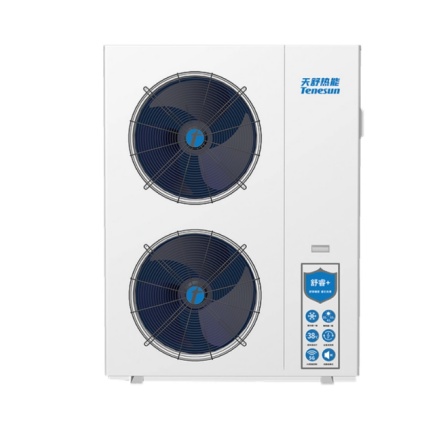
One of the biggest variables in the cost-effectiveness debate is local energy pricing. The ratio between electricity cost and gas cost can significantly affect the payback period of a heat pump.
A heat pump often becomes more cost-effective when:
· Electricity pricing is relatively competitive
· Gas prices are unstable or rising
· The building has good insulation
· The heating system runs at lower water temperatures
· The system is sized correctly
A gas boiler may remain competitive when:
· Natural gas is unusually inexpensive
· Electricity prices are high
· The building has poor insulation
· The heating system requires very high flow temperatures
· The project focuses only on short-term capital cost
Because of this, cost-effectiveness should always be analyzed in relation to the actual building and local energy market, not just the equipment type alone.
A heating system that is cheaper to buy but costly to maintain may not be the better investment.
Gas boilers require regular servicing because they involve combustion, burners, exhaust systems, and safety checks. Over time, components may need replacement, and performance can decline if maintenance is neglected.
Air source heat pumps also require maintenance, but the service profile is different. There is no combustion process, and this may reduce some of the maintenance concerns associated with gas systems. However, the heat pump still needs proper system checks, airflow management, refrigerant system integrity, and control verification.
In many projects:
· Gas boilers have more frequent routine service expectations
· Air source heat pumps benefit from proper commissioning and periodic maintenance
· Good installation quality strongly affects long-term maintenance cost for both systems
A poorly designed heat pump system may perform badly and cost more to operate. A poorly maintained gas boiler may lose efficiency and reliability. In both cases, correct product selection and professional system integration are critical.
From our perspective in the heating industry, the debate around Air Source Heat Pump vs Gas Boiler: Which Is More Cost-Effective? should not be reduced to a simple equipment price comparison. Real cost-effectiveness comes from matching the right technology to the right application. In many of the projects we see today, buyers are no longer focused only on what costs less this year. They are thinking about energy use, long-term operating expenses, environmental direction, and whether the heating system they choose today will still be the right decision years from now. That is where air source heat pumps increasingly demonstrate their value. When they are properly selected, professionally integrated, and used in suitable building conditions, they can provide an excellent balance of efficiency, comfort, and long-term financial benefit.
At TENESUN Heat Pump Co., Ltd., we believe buyers benefit most from clear technical evaluation rather than exaggerated claims. Different projects have different heating loads, climates, and cost priorities, so a realistic comparison always matters. For readers who want to better understand air source heat pump performance, product selection, and application suitability, it is worth taking a closer look at TENESUN Heat Pump Co., Ltd. and learning more about the practical solutions available for modern heating projects. In our experience, informed decisions create better long-term results than low upfront pricing alone.
Not always. It depends on electricity prices, gas prices, building insulation, and system design. In many efficient buildings, an air source heat pump can be cheaper to run over time.
Gas boilers usually have lower equipment and installation costs, especially in buildings that already have gas infrastructure and traditional radiator systems in place.
Yes. Better insulation usually improves heat pump performance because the building needs less heat and can operate more effectively with lower water temperatures.
A common mistake is comparing only upfront purchase cost and ignoring running cost, maintenance, lifespan, and future energy or policy changes.


